
Industrial homogenizer machines are essential in various industries, including food, pharmaceuticals, cosmetics, and chemicals. These machines are designed to create a uniform mixture of two or more liquids that are not naturally soluble in each other. The process of homogenization involves breaking down particles into smaller sizes and distributing them evenly throughout the mixture. This article will delve into the working principles of industrial homogenizer machines, their components, and their applications across different industries.
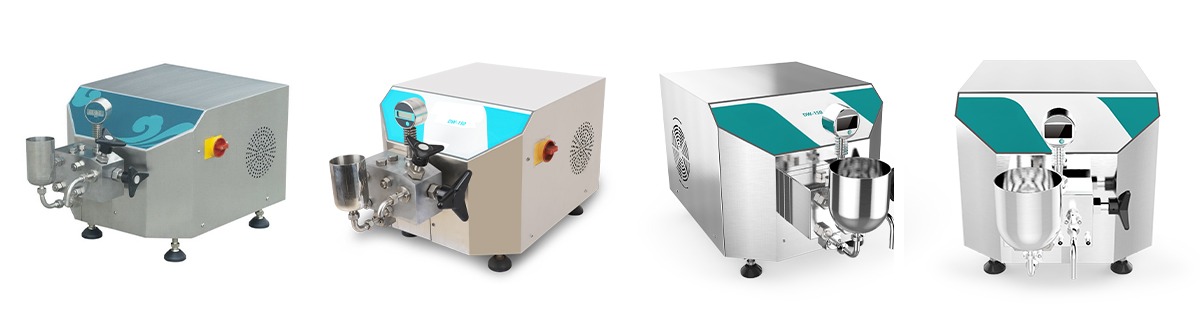
Understanding Homogenization
Homogenization is a process that ensures a uniform mixture of two immiscible liquids. This is achieved by reducing the size of particles in one liquid and dispersing them evenly throughout the other liquid. A classic example of homogenization is in the dairy industry, where milk fat globules are broken down into smaller sizes and uniformly distributed throughout the milk. This process prevents the separation of cream from the milk, extending its shelf life and improving its texture.
The homogenization process typically involves high-pressure systems. The liquid mixture is forced through a narrow passage under high pressure, causing the particles to break down into smaller sizes. This is often achieved using pressure homogenizer systems, which are designed to handle the extreme pressures required for effective homogenization. These systems are equipped with specialized valves and pumps that ensure the liquid is processed efficiently and uniformly.
Key Components of Homogenizer Machines
Industrial homogenizer machines consist of several key components that work together to achieve the desired homogenization effect. The primary components include the homogenizing valve, the piston pump, and the pressure control system. The homogenizing valve is the core component where the actual breakdown of particles occurs. It consists of a valve seat, an impact ring, and a valve stem, which work together to create the high-pressure environment needed for homogenization.
The piston pump is another critical component that generates the high pressure required to force the liquid through the homogenizing valve. These pumps are designed to handle the extreme pressures and flow rates needed for industrial applications. The pressure control system ensures that the pressure is maintained at the optimal level throughout the homogenization process. This system often includes sensors and control mechanisms that adjust the pressure in real-time to ensure consistent results.
Applications of Homogenizer Machines
Homogenizer machines are used in a wide range of industries, each with its specific requirements and applications. In the food industry, homogenizers are essential for processing milk, yogurt, cream, and baby formula. They ensure that the fat and protein particles are uniformly distributed, improving the texture and shelf life of these products. In the pharmaceutical industry, homogenizers are used to create stable emulsions and suspensions for drug formulations. They are also used in the production of artificial colors and other pharmaceutical products.
In the cosmetics industry, homogenizers are used to create stable emulsions for creams, lotions, and other skincare products. They ensure that the ingredients are evenly distributed, providing a consistent texture and appearance. In the chemical industry, homogenizers are used for the production of lubricants, emulsions, and latex products. They ensure that the chemical components are uniformly mixed, improving the quality and consistency of the final product.
High-Pressure Homogenization Technology
High-pressure homogenization is a widely used technology in industrial homogenizer machines. This technology involves forcing the liquid mixture through a narrow passage under extremely high pressure, causing the particles to break down into smaller sizes. The homogenizer systems used in this process are designed to handle pressures ranging from 100 to 1500 bar, depending on the application. The high pressure creates intense turbulence and shear forces, which effectively break down the particles and ensure a uniform mixture.
One of the key advantages of high-pressure homogenization is its ability to achieve a high degree of particle size reduction. This is particularly important in industries where the uniformity of the mixture is critical, such as in the production of pharmaceuticals and cosmetics. High-pressure homogenization also allows for the processing of large volumes of liquid in a relatively short amount of time, making it an efficient and cost-effective solution for industrial applications.
Comparison of Homogenizer Machines
There are several manufacturers of industrial homogenizer machines, each offering unique features and capabilities. One notable example is the German company HSC, which produces high-quality homogenizers capable of processing between 10 to 60,000 liters per hour. These machines operate at pressures ranging from 100 to 1500 bar, making them suitable for a wide range of applications. HSC homogenizers are known for their durability, ease of maintenance, and high-performance capabilities.
Another leading manufacturer is the Italian company Gea, which produces homogenizers capable of processing up to 80,000 liters per hour at 120 bar. Gea homogenizers are designed for high efficiency, safety, and reliability, making them a popular choice in the food and pharmaceutical industries. Both HSC and Gea homogenizers are equipped with advanced control systems and are designed for easy maintenance and cleaning, ensuring optimal performance and longevity.
Innovations in Homogenization Technology
Recent advancements in homogenization technology have led to the development of more efficient and energy-saving machines. One such innovation is the micro-gap valve technology, which reduces the operating pressure required to achieve the desired particle size. This technology has been proven to reduce energy costs by up to 25% while maintaining the same level of product quality. Another innovation is the use of hydraulic valve actuation technology, which provides precise control over the homogenization pressure, ensuring consistent results and reducing maintenance costs.
These innovations have made homogenizer machines more efficient and cost-effective, allowing manufacturers to produce high-quality products while reducing their environmental impact. As the demand for high-quality, uniform mixtures continues to grow, the development of new and improved homogenization technologies will play a crucial role in meeting these needs.
Video Demonstration
Industrial homogenizer machines are essential in various industries, providing a uniform mixture of immiscible liquids through the process of homogenization. These machines are equipped with high-pressure systems, specialized valves, and advanced control mechanisms that ensure efficient and consistent results. With the development of new technologies, such as micro-gap valve and hydraulic valve actuation, homogenizer machines have become more efficient, cost-effective, and environmentally friendly. As the demand for high-quality, uniform mixtures continues to grow, the role of homogenizer machines in industrial processes will remain crucial.